
Security and camera cabling
Mark proposed camera locations, network connections, and equipment-room destinations. Review the cable routes alongside coverage and recording plans so the infrastructure scope follows the intended security system.
Plan the cabling around your building, connected systems, and operating schedule. Based in Troy, DSE designs, installs, tests, and documents low-voltage infrastructure for Metro Detroit renovations, build-outs, and technology upgrades.
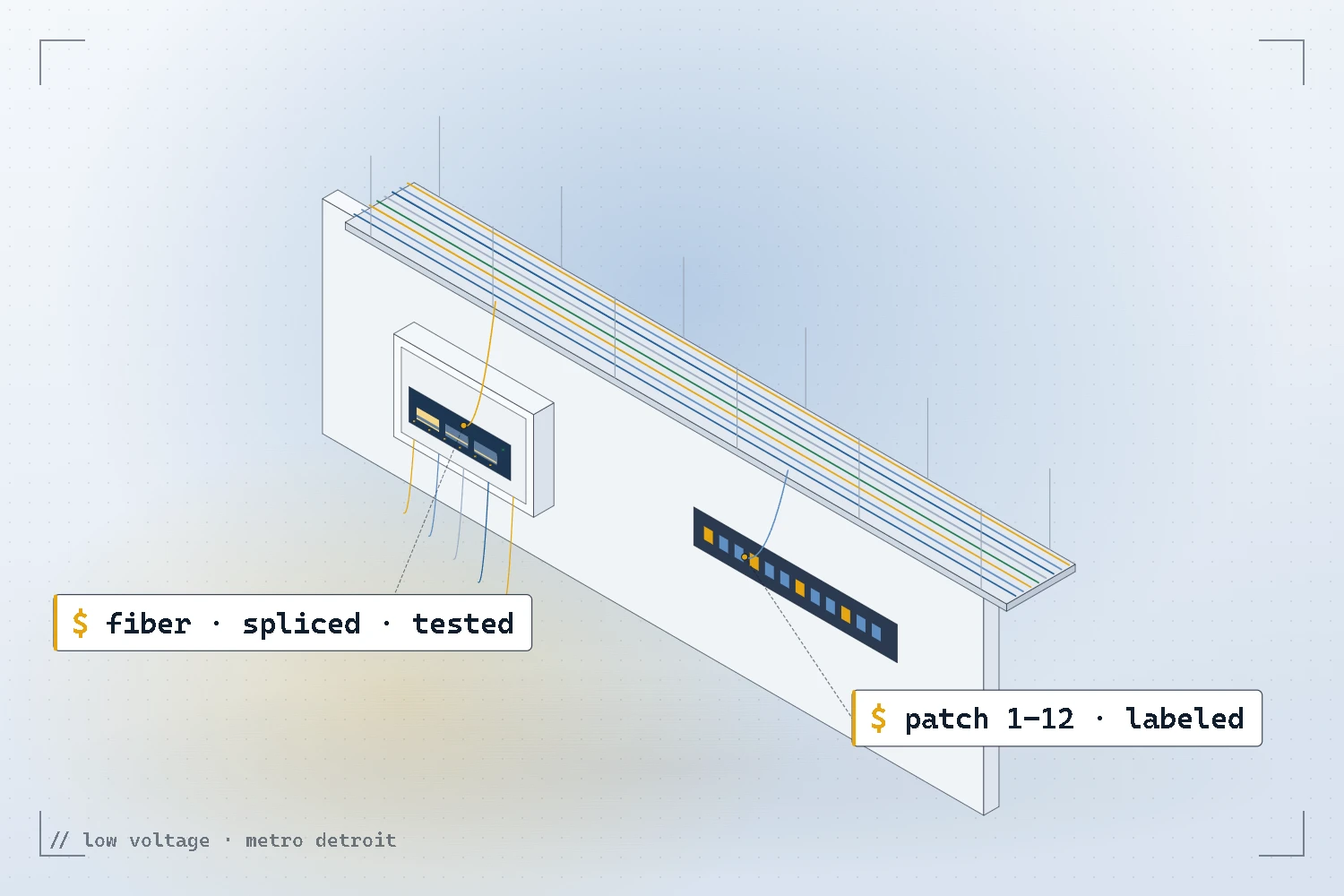
A useful scope connects the device list to the physical installation. Identify what is being added, moved, retained, or replaced before deciding where new cabling is needed.
Mark proposed camera locations, network connections, and equipment-room destinations. Review the cable routes alongside coverage and recording plans so the infrastructure scope follows the intended security system.
List the doors, readers, controllers, and existing wiring involved. Confirm who owns the door hardware and access-system configuration so the cabling work is coordinated with the wider door project.
Bring outlet counts, rack and patch-panel information, and any current cable labels. Separate new runs from connections that need review or testing, and agree how the finished labels will map to rooms and equipment.
Review ceiling access, available pathways, affected work areas, and the renovation sequence. Name the facilities, IT, and contractor contacts who can coordinate access and planned service changes.
For copper drops and fiber links, identify the origin and destination rooms, existing pathways, and the equipment at each end. Keep available drawings and test records with the project information. Reuse decisions should follow the site review; an existing cable's presence alone does not establish its condition or suitability for the planned system.
Having the following information available helps DSE and your team discuss the installation scope and identify what needs an on-site review.
Discuss how technicians will reach ceilings, shared spaces, and equipment rooms while the site remains in use. Identify which work can occur during normal hours and which changes need an agreed service window. For connections serving an active network, security system, or phone service, name the system owner and agree the change, verification, and recovery steps before disconnecting anything.
Construction access, pathway condition, retained cabling, and other trades can affect the installation sequence. Document those dependencies in the project scope so facilities and IT teams can coordinate the work.
Decide which copper or fiber tests are needed for the agreed scope, how the results will identify each run, and who will review the records at handoff. Testing requirements depend on the installed cabling and intended use.
Useful handoff records may include a cable schedule tied to outlet and patch-panel labels, route or as-built drawings, equipment-room information, and agreed test results. Ask how retained cabling, inaccessible routes, and outstanding items will be recorded so the operations team can identify completed work and follow-up needs.
Coordinate the cabling plan with managed network support, video surveillance, and access control installation where those systems are part of the project.
Explore the existing Metro Detroit service-area pages when preparing a project at your facility. DSE is headquartered in Troy; the site review and scope depend on the building and systems involved.
Share the facility address, project goals, device counts, and access or scheduling constraints through the contact page. DSE can review the initial scope and discuss the appropriate assessment and service arrangements.