
Identity and cloud security
Microsoft 365 configuration, multi-factor authentication, access controls, and practical cloud identity protection.
Managed security for Michigan organizations
DSE helps Michigan organizations reduce technology risk across identity, endpoints, networks, Microsoft 365, backups, and day-to-day managed IT operations.
Service definition
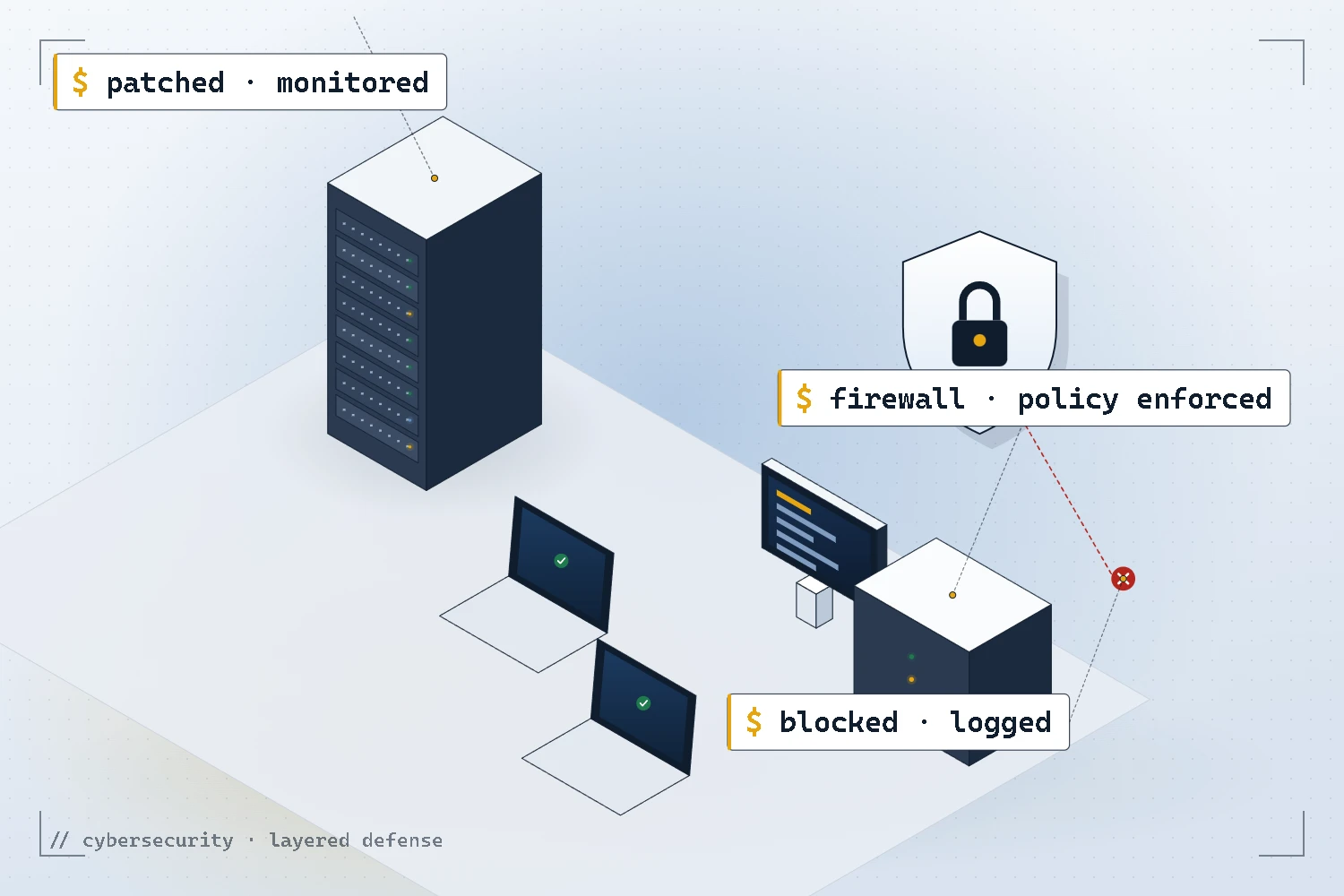
Cybersecurity reduces technology risk through identity controls, endpoint protection, patching, network security, backups, monitoring, and response planning. DSE integrates cybersecurity with managed IT, Microsoft 365, networks, workstations, and facility technology for Michigan organizations.
Core coverage
Microsoft 365 configuration, multi-factor authentication, access controls, and practical cloud identity protection.
Device security, operating-system updates, endpoint protection, monitoring, and support aligned with managed workstation care.
Firewall and network controls, backup planning, recovery priorities, documentation, and coordinated response preparation.
Readiness review
A review starts with the organization, current environment, priorities, and known concerns. Scope is documented for each customer rather than assumed.
Review account access, administrative roles, sign-in protections, and practical identity controls.
Review workstation and server updates, protection, device visibility, and support ownership.
Review Microsoft 365 access, sharing, collaboration settings, and user-facing risk controls.
Document protected data, recovery priorities, backup responsibilities, and restoration planning.
Identify training, reporting, and testing needs that help users recognize and escalate suspicious activity.
Organize technical findings, ownership, policies, and practical remediation priorities into a supportable roadmap.
Documented operating model
Review the environment, identities, endpoints, networks, cloud services, backups, existing controls, and business priorities.
Separate urgent gaps from longer-term improvements and identify the systems, owners, and dependencies involved.
Document scope, responsibilities, sequencing, support needs, and the practical next steps the organization can evaluate.
Connect approved security work with managed IT, Microsoft 365, endpoint, network, backup, and lifecycle operations.
Connected services
DSE supports business technology with managed IT, custom software and website services, company computer systems, advanced repair, and security-minded operations.
DSE keeps business networks stable, monitored, and secure for facilities with users, devices, cameras, phones, and cloud apps.
DSE helps keep workstations, laptops, users, and business endpoints updated, protected, and ready for productive work.
Direct answers
DSE cybersecurity support connects identity protection, endpoint security, patching, network controls, Microsoft 365 administration, backup planning, and managed IT operations. The exact scope is documented for each customer environment.
Yes. DSE supports Microsoft 365 administration and security controls, including identity configuration, multi-factor authentication, access management, and related cloud-service planning.
Cybersecurity has its own risk and control objectives, but many controls depend on managed IT work such as patching, identity administration, endpoint management, backups, network configuration, and user support. DSE links those services instead of treating them as unrelated tasks.
No. The assessment form is for planning and readiness discussions, not active incident evidence. Existing DSE managed IT customers should use the MSP Help Desk; other organizations should use their established incident-response or emergency escalation contact.
Use the secure planning form to describe the organization, current technology environment, and high-level risk or support concern without including sensitive incident details.